
Make Your Home "Better" by Reducing Your Energy Bills(9-minute read)Owning a home comes with many expenses, but energy costs are among the few that homeowners may be able to reduce through everyday

Dated: September 19 2026
Views: 58
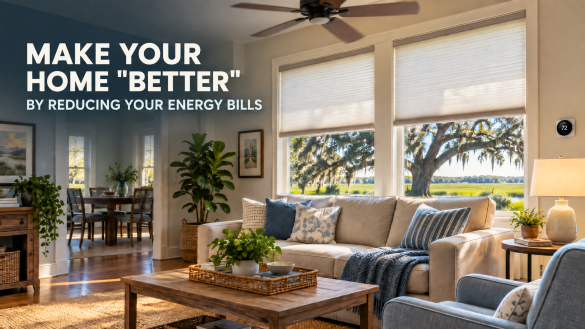
(9-minute read)
Owning a home comes with many expenses, but energy costs are among the few that homeowners may be able to reduce through everyday choices and carefully selected improvements.
That matters here in South Louisiana, where air-conditioning systems work especially hard during our long, hot and humid summers. Although no single change will dramatically transform every utility bill, several smaller improvements can work together to make a home more comfortable, efficient and affordable to operate.
Some steps cost nothing. Others require a modest investment. The best place to begin is by concentrating on the parts of the home that use—or lose—the most energy.
Windows can be a major source of unwanted heat gain during a South Louisiana summer. Direct sunlight passing through the glass warms floors, furniture and other interior surfaces, adding to the workload placed on the air-conditioning system.
Window coverings can help manage that heat without requiring replacement windows.
Close blinds, shades or curtains before direct sunlight begins entering the room. This is especially helpful on east-facing windows in the morning and west-facing windows during the hotter afternoon hours.
The most effective coverings generally fit close to the window and limit openings around the edges. Options may include:
Cellular shades are especially useful because their honeycomb construction creates insulating air pockets. The effectiveness of any window treatment, however, depends on the product, fit, material, color and installation.
In some homes, exterior shading may provide even greater protection because it stops part of the sun’s energy before it reaches the glass. Awnings, shutters, shade trees and properly designed roof overhangs can all help, although exterior products should be selected with hurricane safety and maintenance in mind.
South Louisiana winters are usually mild, but cold periods still occur. On sunny winter days, open coverings on windows receiving direct sunlight and allow the sun to warm the room naturally. Close the coverings after sunset to reduce heat loss through the glass.
Before investing in new treatments, check the windows themselves. Worn weatherstripping, damaged caulk and gaps around the frames may allow conditioned air to escape and outdoor air to enter.
Cooling typically represents a substantial part of a South Louisiana home’s electricity use. Raising the thermostat even slightly can reduce the amount of time the air-conditioning system runs.
A setting near 78 degrees while you are home is often suggested as an energy-conscious starting point during warm weather. It is not a universal rule. Health conditions, age, humidity, insulation, sun exposure and personal comfort all matter.
The goal is to select the highest temperature that remains reasonably comfortable for the household—not to make the home unpleasant or unsafe.
When the house will be unoccupied for several hours, a programmable or smart thermostat can automatically adjust the setting. Avoid making extreme changes that could allow heat and humidity to build up indoors.
A smart thermostat may also help homeowners:
Remember that lowering the thermostat far below the desired temperature does not usually cool the house faster. It may simply cause the system to run longer.
In South Louisiana, comfort is not determined by temperature alone. High indoor humidity can make a room feel warmer and may contribute to condensation, musty odors and mold growth.
Keep exterior doors and windows closed while the air conditioner is operating. Use bathroom and kitchen exhaust fans when producing steam or moisture, but turn them off when they are no longer needed so they do not continue pulling conditioned air from the home.
If the house feels damp even when the temperature is comfortable, have the air-conditioning system evaluated. An oversized, poorly maintained or improperly operating system may cool the air without running long enough to remove sufficient moisture.
Do not compensate for a humidity problem simply by making the house colder. That can increase energy use without correcting the cause.
An efficient thermostat setting cannot overcome a neglected HVAC system.
Check the air filter regularly and replace or clean it according to the equipment manufacturer’s instructions. A clogged filter can restrict airflow and force the system to work harder.
Homeowners should also:
Ductwork running through a hot attic can lose a significant amount of conditioned air when connections are loose or insulation is damaged. A qualified HVAC professional can evaluate the system, airflow and duct condition.
Water heating is another meaningful household energy expense.
For many homes, a temperature setting of approximately 120 degrees Fahrenheit provides an effective balance between comfort, energy use and protection from scalding. However, households with certain health concerns, specialized appliances or manufacturer requirements should seek appropriate professional guidance before changing the setting.
After adjusting the water heater, verify the temperature at a faucet rather than relying solely on the markings on the control.
Additional ways to reduce water-heating costs include:
Some older tank-style water heaters may benefit from an insulating blanket. Before adding one, check the manufacturer’s instructions. A blanket should never cover controls, vents, warning labels or combustion-air openings. Many newer units are already well insulated, and blankets are generally inappropriate for certain designs, including heat-pump water heaters.
Heating water accounts for much of the energy used by a conventional washing machine. Modern detergents and washers are often designed to clean ordinary laundry effectively in cold water.
Cold water may therefore be a sensible default for many loads, while warmer settings can be reserved for items that genuinely need them. Always follow garment-care instructions and appropriate sanitation guidance.
Other useful habits include:
Outdoor drying can be useful, but South Louisiana’s humidity and frequent rainfall may limit its effectiveness. An indoor drying rack in a properly ventilated area can be a practical alternative. Avoid introducing excessive moisture into an already humid room.
Small openings around a home can collectively waste a surprising amount of conditioned air.
Common trouble spots include:
Weatherstripping and caulk are relatively inexpensive, but they must be used in the correct locations. Do not seal required ventilation openings, combustion-air supplies or drainage paths.
Attic insulation is also important, particularly because attics can become extremely hot during a Louisiana summer. If insulation appears compressed, uneven, wet or insufficient, consider having the attic evaluated by a qualified insulation or energy professional.
Moisture problems and roof leaks should be repaired before new insulation is installed.
Ceiling fans cool people by moving air across the skin; they do not lower the actual room temperature.
Use fans while the room is occupied and turn them off when everyone leaves. When a fan is operating, you may be comfortable at a slightly higher thermostat setting, which can reduce air-conditioning demand.
During summer, most ceiling fans should rotate counterclockwise when viewed from below, creating a downward breeze. Because fan designs vary, consult the manufacturer’s directions.
LED bulbs use substantially less electricity than traditional incandescent bulbs and generally last much longer. They also release less heat into the room, which is helpful during cooling season.
Begin with fixtures used most often, such as those in kitchens, living rooms, hallways and exterior areas. Select the appropriate brightness, color temperature and fixture rating. Bulbs used in enclosed or dimmable fixtures should be approved for those applications.
Timers, motion sensors and smart switches may also reduce unnecessary lighting use.
Electronics and appliances can consume electricity even when they are not actively being used.
You do not have to unplug everything in the house, but it may help to connect groups of electronics to switchable power strips. This works particularly well for entertainment centers, computer equipment and guest-room devices.
When replacing an appliance, compare:
Do not replace a functioning appliance solely for a small efficiency improvement without comparing the purchase price against the likely savings. The most economical decision depends on the appliance’s age, condition, usage and repair history.
If utility bills seem unusually high, a home-energy assessment can help identify where energy is being lost.
Depending on the provider, an assessment may examine:
Some electric and natural-gas utilities offer energy evaluations, rebates or efficiency programs. Available programs and eligibility requirements can change, so homeowners should confirm current details directly with their utility provider.
Energy-conscious improvements are not only about monthly bills. They can also make a home feel more comfortable and better maintained.
Potential buyers may appreciate:
Energy upgrades do not automatically produce a dollar-for-dollar increase in market value, but they can improve the ownership experience and help distinguish a well-maintained home.
Keep receipts, warranties, permits and contractor information for completed improvements. These records may be valuable when the home is eventually placed on the market.
Reducing energy use does not require turning the home into a construction project.
Start with the easiest steps:
Once those habits are established, consider larger improvements based on the home’s actual needs and the amount of time you expect to own it.
A sweeter home is not simply one with lower bills. It is a home that feels comfortable, operates efficiently and supports the people living in it.
Randall C. (Randy) Anderson, REALTOR®/Agent
LOCAL PROFESSIONAL COMMITTED
M o v e R e a l t y, L L C
Licensed in Louisiana | Agent License: #58902
2107 S. Burnside Av, Suite #3
Gonzales, LA 70737
Office: 225-644-7797
Mobile: 225-921-9777
Email: RandallAndersonREALTOR@gmail.com
Social media: Instagram | Facebook | YouTube | LinkedIn
This article was adapted and substantially updated for 2026 from the consumer handout Make Your Home Sweeter by Reducing Your Energy Bills—Part 1, originally presented by Randy Anderson in cooperation with Home Warranty of America, Inc.
The original handout’s window, thermostat, water-heating and laundry recommendations were reviewed and modernized using current homeowner guidance from the U.S. Department of Energy’s Energy Saver program, including its information on energy-efficient window coverings, heating and cooling, water heating, lighting and household appliances.
Energy savings vary according to climate, utility rates, household habits, equipment condition and the construction of the home. Consult qualified contractors and follow manufacturer instructions before changing, insulating or servicing household equipment.


I am a REALTOR®/Agent at Move Realty, I grew up and live in Gonzales, Louisiana. I am married to Eileen (Clyde) Anderson, father to three daughters and a step-son, grandfather to five amazing....
Make Your Home "Better" by Reducing Your Energy Bills(9-minute read)Owning a home comes with many expenses, but energy costs are among the few that homeowners may be able to reduce through everyday
When a Louisiana Property Owner Dies: What Families Should Know About Successions and Real Estate(9-minute read)When someone dies owning a home, land or other real estate in Louisiana, family
Article 10 — What Costs Should I Expect When Selling Land? Land Seller Series — Article 10 of 30(17-minute read)In Article 9, we looked at a question every serious land seller
Emergency Preparedness for South Louisiana Homeowners: A Practical 2026 Guide7-minute readYour home is one of the largest investments you will ever make, but protecting the property is only part of
 The multiple listing information is provided by the Greater Baton Rouge Association of REALTORS®, Inc. multiple listing service from a copyrighted compilation of listings. The compilation of listings and each individual listing are ©2026 MLS. All Rights Reserved. The information provided is for clients' personal, non-commercial use and may not be used for any purpose other than to identify prospective properties clients may be interested in purchasing. All properties are subject to prior sale
or withdrawal.
Show More...
The multiple listing information is provided by the Greater Baton Rouge Association of REALTORS®, Inc. multiple listing service from a copyrighted compilation of listings. The compilation of listings and each individual listing are ©2026 MLS. All Rights Reserved. The information provided is for clients' personal, non-commercial use and may not be used for any purpose other than to identify prospective properties clients may be interested in purchasing. All properties are subject to prior sale
or withdrawal.
Show More...
